The Art of Survival
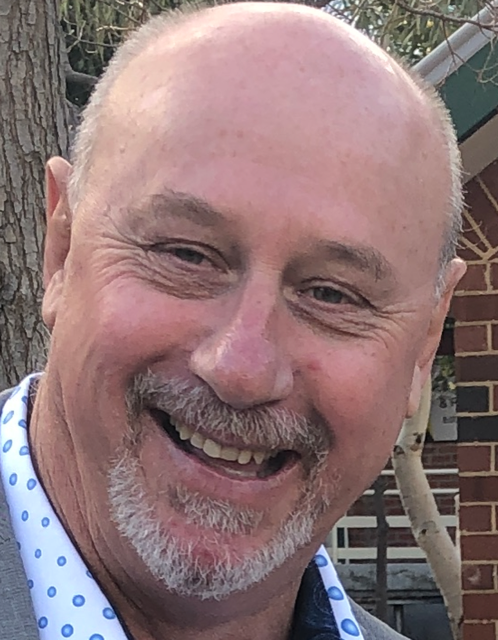
Words by Trevor Richards
Western Australian artist Trevor Richards reflects on a career spent balancing creative ambition and financial imperative, private practice and a desire to share his passion for the artistic process. It’s been an exciting ride from canvas to streetscape.
When reflecting on my career progression the temptation is to summarise it as a series of conscious choices, logical steps and self-motivated moves. However, it’s not like that at all – more like stumbling into situations you hadn’t anticipated, being offered opportunities you’re not sure you’re ready for, and wondering if there’s anything around the next corner. What makes this journey interesting however is knowing that you’re involved in doing something you love.
My mother has always been a keen and talented artist who sparked my interest in art. Also, the way time seemed to magically disappear when I was drawing, or painting made me want to keep doing it. Mum’s encouragement made it easy for me to see a path towards tertiary study and subsequent early steps as an artist. I later realised that while making art was totally absorbing, fun and exciting, it wasn’t possible to generate a steady income on which to survive, so I returned to university to get a teaching qualification.
Apart from paying the bills, I learnt on the job about a wide range of different art media and techniques. I also developed strategies of keeping large groups of restless adolescent boys and girls interested in projects, whilst sharing my passion for the mysterious process of turning ideas into artworks. Since retiring from teaching fifteen years ago I still bump into former students and proudly follow the progress of those who have ventured into the art world with success, and who have also become close friends.
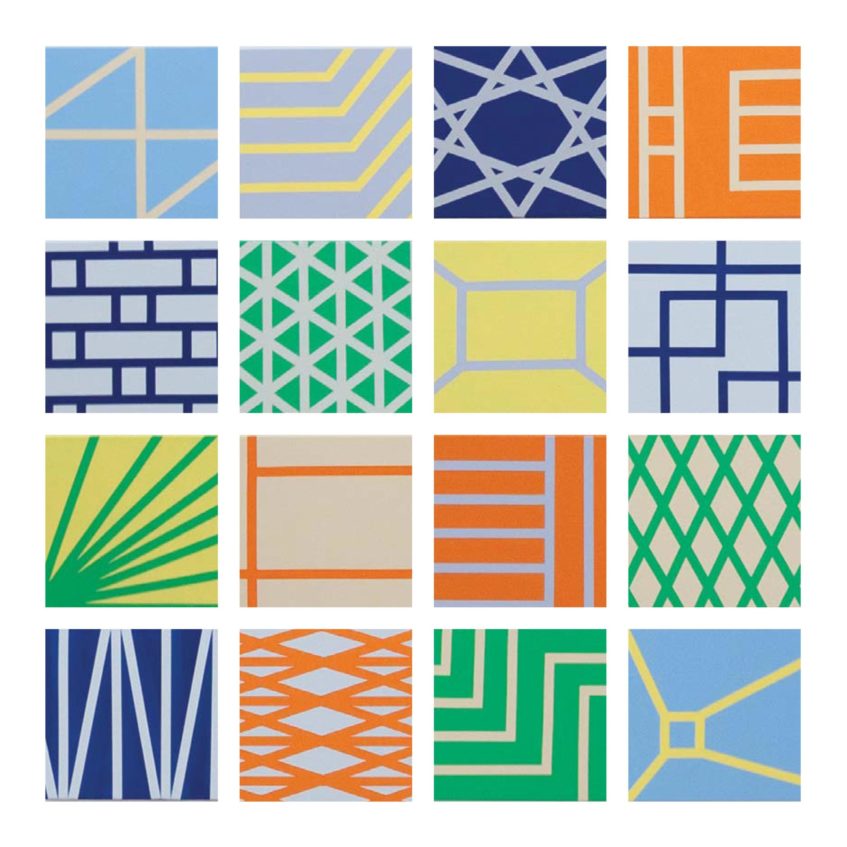
Throughout my teaching career I managed to find time to develop my own art practice and exhibit in group and solo shows. Moving into a part time teaching role was an important step, as well as adopting a more organised approach. I needed to be more disciplined, to know what I was doing before I arrived in the studio, rather than sitting around waiting for inspiration to strike. My observations of how our built environment is constructed of surfaces, patterns, colour and geometry drew me towards a more minimal, concrete attitude towards making artworks. My art practice shifted from a representational basis in early years to one where the artwork had its own presence and autonomy. These ideas have characterised my work over the past thirty years.
Richards’ interest in architectural interiors, colour relationships, pattern and perception are constants in his 30 year practice although the outcomes of his investigations range playfully in form – Louise Morrison on Trevor Richards, Artlink 2012
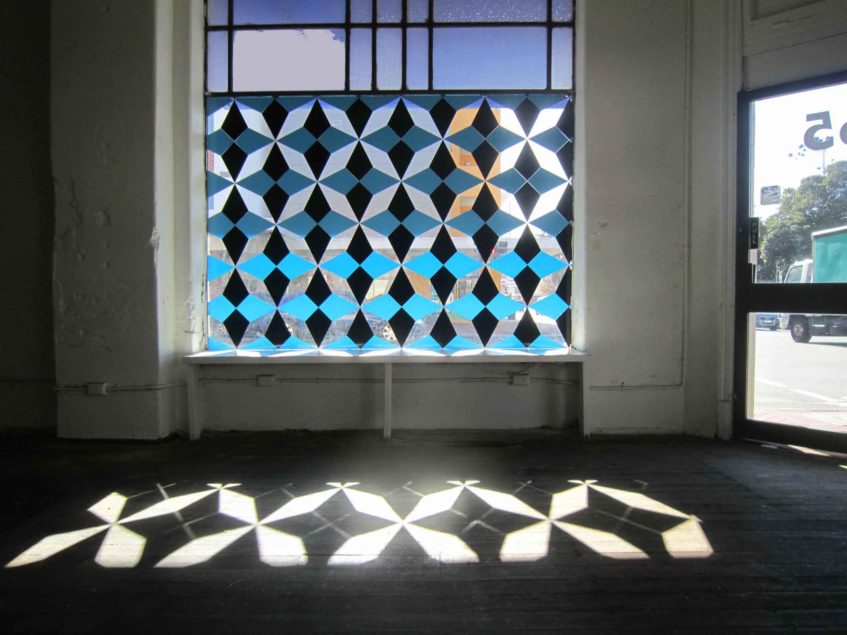
When I stopped teaching, I was able to devote more time to my studio practice. There have also been some exciting opportunities to collaborate in public commissions, to enjoy the thrill of seeing an idea become reality in a public arena. Being involved in public art demands many new skills unfamiliar to the studio-based artist. Insurance, construction white card, interpreting building plans, PPE, EWP, health and safety, keeping to budgets and working to deadlines are some of the unavoidable demands of making art in public spaces. Being responsible to and reliant on your trusty team as well as other trades and professions, forces you to work with individuals, companies and organisations to successfully complete the project. I feel the need to try harder, be more professional, to counteract the false impression held by many in the public art sphere that artists are lazy, naive and unreliable.
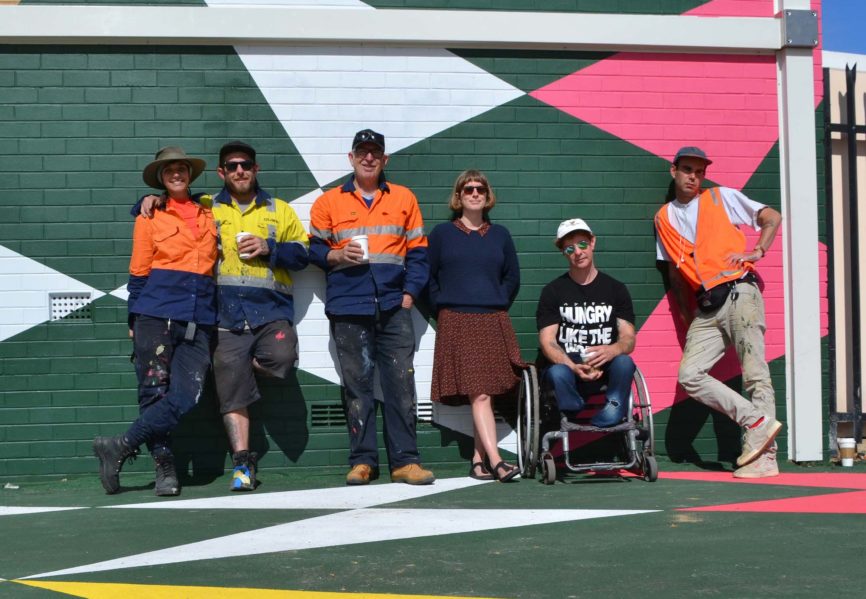
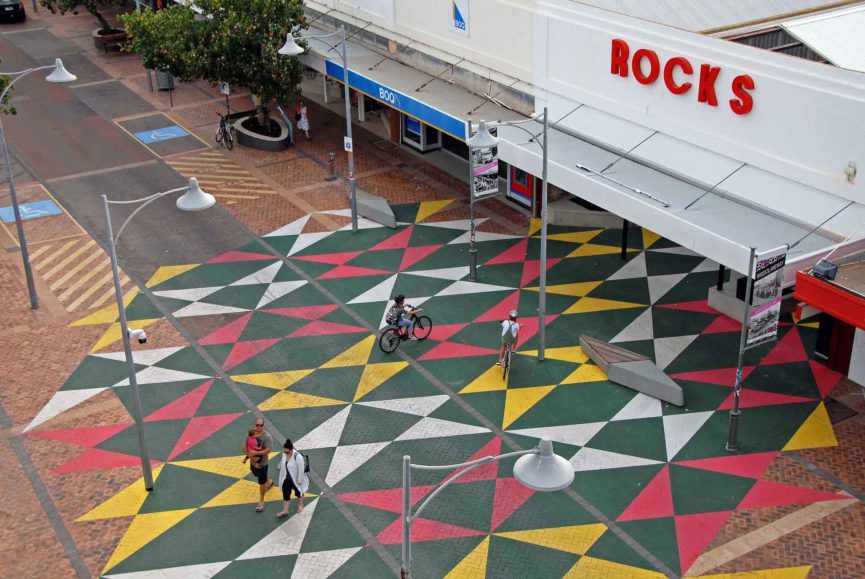
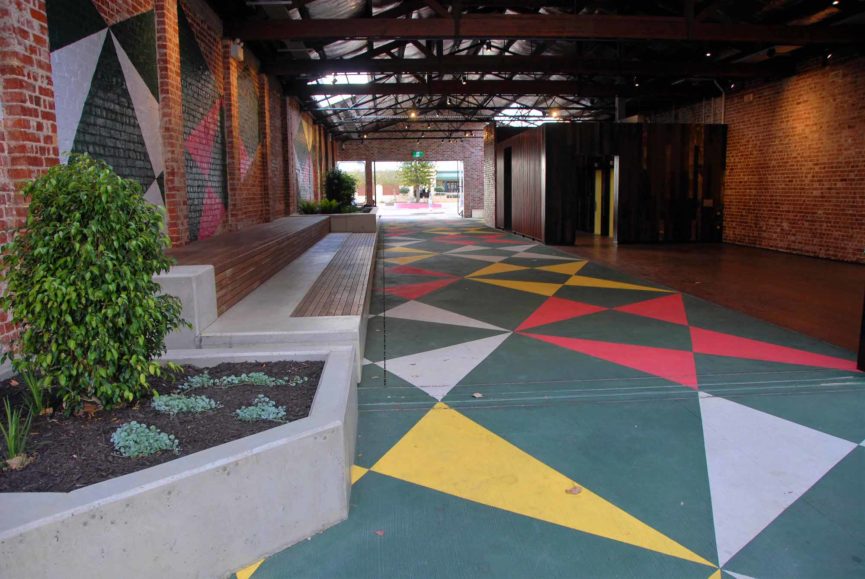
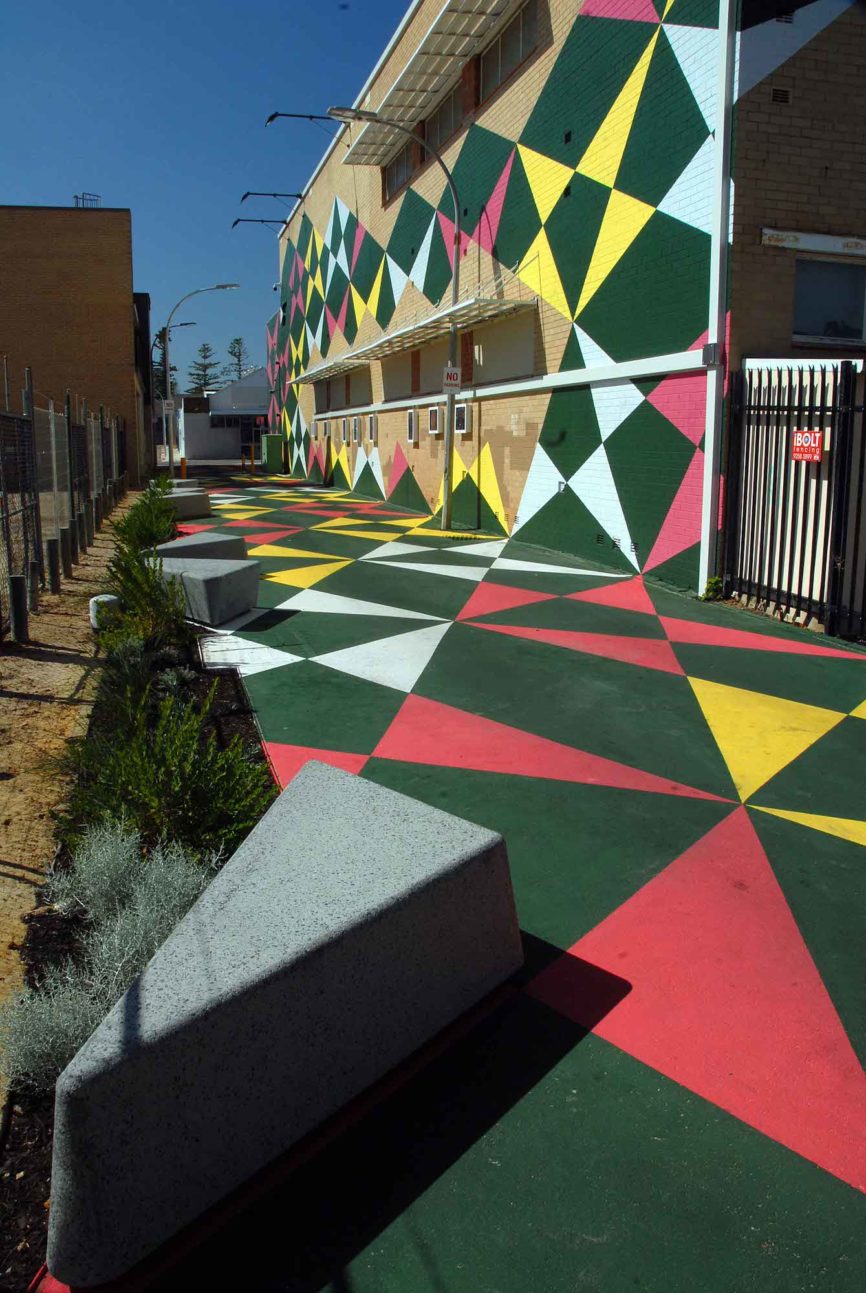
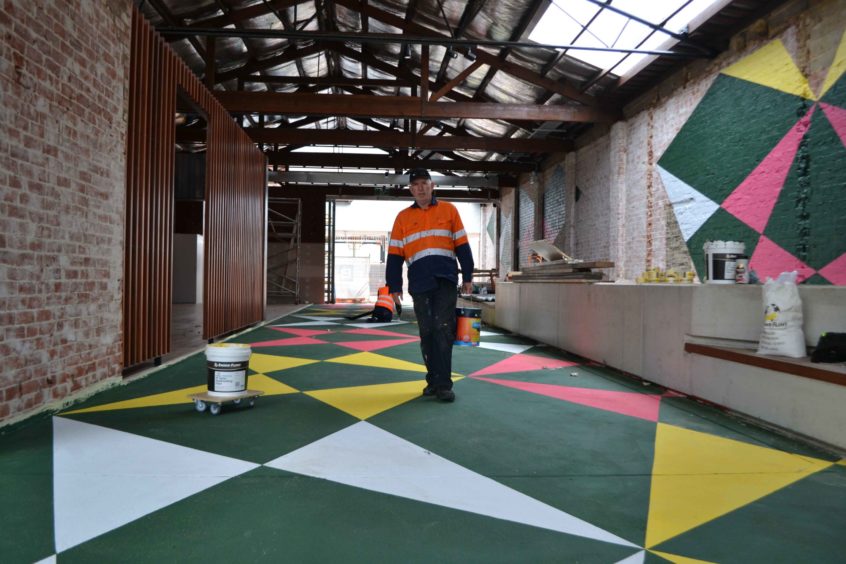
The recent Wildflower Project for the City of Greater Geraldton was a huge challenge, painting a massive meta graphic pattern through the centre of the city. 1800 square metres of hand painted road, laneway and walls, 600 litres of paint and 12 kilometres of masking tape gives an indication of the scale.
Despite these challenges public art has it’s financial rewards and allows me the opportunity to contribute to the aesthetics of shared spaces. I hope that my interventions into public areas are appropriately useful, giving energy and providing a positive experience to those who pass through them.
NB: The Wildflower Project was completed in collaboration with UDLA @udlastudio, the City of Greater Geraldton @cityofgreatergeraldton and TRCB Architects @trcb_architects.
Next Article
When your house makes you sick, how do you self-isolate?
(View Article)