Aggregated Culture
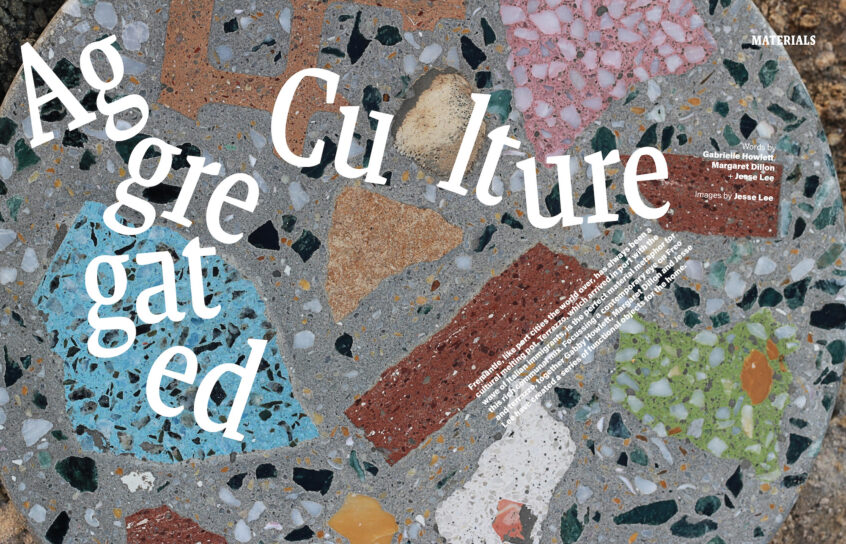
Fremantle, like port cities the world over, has always been a cultural melting pot. Terrazzo, which arrived in port with the wave of Italian immigrants, is the perfect metaphor for this rich communal mix. Focussing a contemporary eye on Freo and terrazzo, Gabrielle Howlett, Margaret Dillon and Jesse Lee created a series of functional objects for the home that were exhibited as part of the launch of Commune.
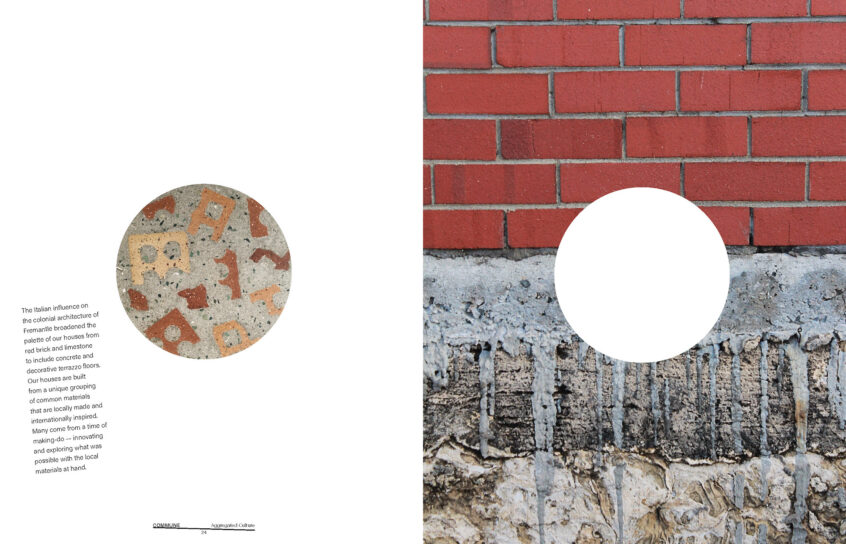
The Italian influence on the colonial architecture of Fremantle broadened the material palette of our houses from red brick and limestone to include arches, concrete and decorative terrazzo floors. Our houses are built from a unique grouping of common materials that are locally made and internationally inspired. Many come from a time of making do – innovating and exploring what was possible with the local materials at hand.
The three of us have been particularly curious about terrazzo and its capacity to move between the decorative and functional, the local and international. Gabrielle Howlett from How Productive has long been fascinated by the story of the Scolaro terrazzo tiles made in Fremantle through the 50s and 60s at the Universal Tile Factory. Gabby approached Fremantle-based contemporary terrazzo makers Margaret Dillon from Concreto and Jesse Lee from The Terrazzo Tailor to create a functional product using their skills.
Together we have designed a limited series of terrazzo tableware revisiting the building palette of Fremantle and creating new connections to place and community. Bricks were salvaged from tips and verges, limestone and shells collected on walks around South Beach. Following tip offs from friends, there has even been the occasional raid on a loaded skip bin. These found materials are bound together in concrete allowing us to develop a unique terrazzo product that is very local, very Fremantle. Cast products produced in a traditional terrazzo method are polished to highlight the individual beauty of each material and equally expose the importance of unity. The grinding process reveals the delicateness of the most utilitarian materials, like fine sand and stone particles in brick clay.
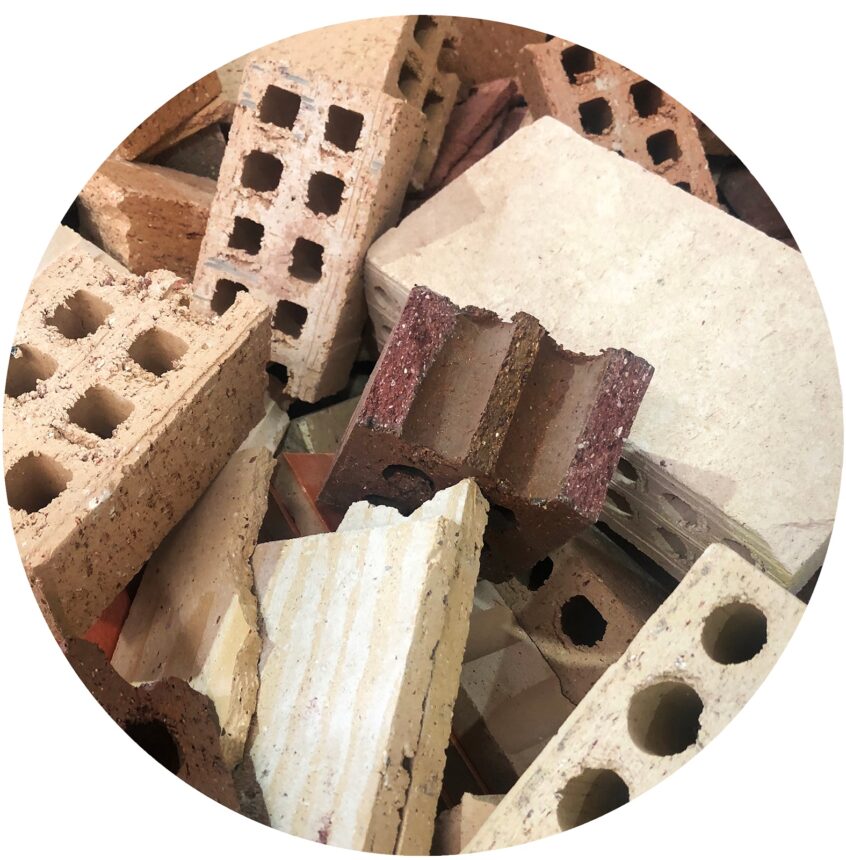
Where materials such as brick are typically seen en masse as units of building, here we see only small parts, in section and polished. The humble brick moves from utility to beauty.
This project has been a collaboration inspired by the commune of Fremantle. It celebrates the role of the built and natural environments in creating a unique sense of place.
*Aggregated Culture was first published in Commune, issue o3 of our journal. Copies can be purchased through TheFulcrum.Press and all proceeds are directed to The Fulcrum Fund , a charitable fund that we established to support projects in First Nations communities.
Next Article
The Bleeding Tree
(View Article)