Many a True Word
My favourite thing to draw is a comic that connects to someone, and my favourite way to connect to someone is to give them insight into their life.
I usually get my insights from things that my friends and family are saying and doing. This sample size has fortunately been representative of a wider audience. For example, if I see that my mum is constantly talking to me about how much she wants to be a grandma, I assume that this must be happening to other people. Then I draw a comic about it, and people feel like they’re not alone
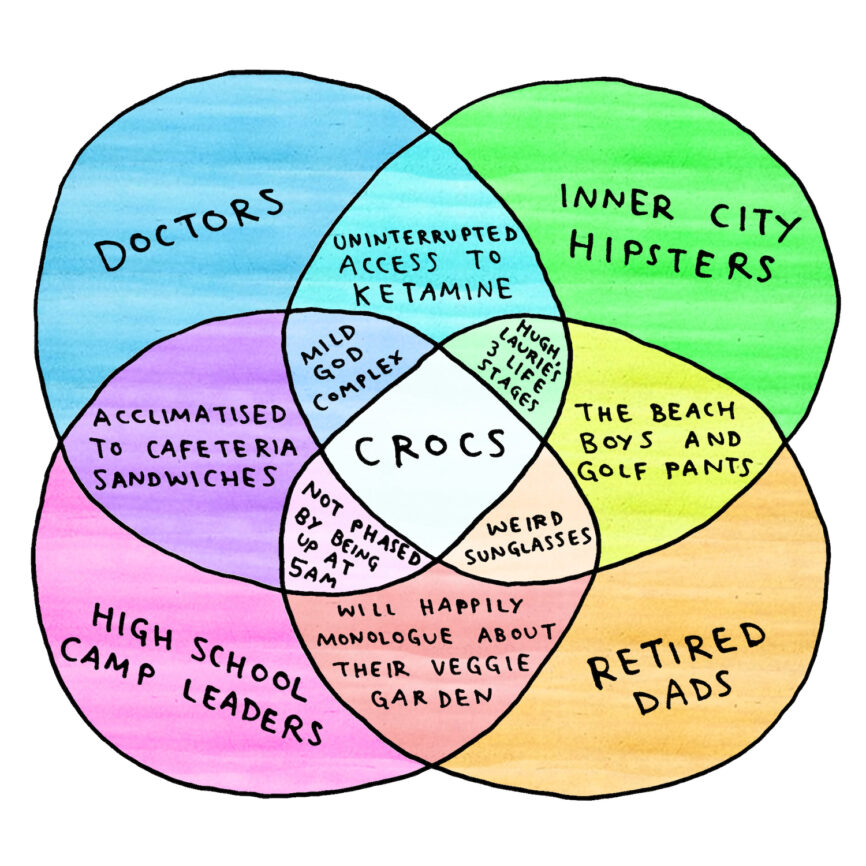
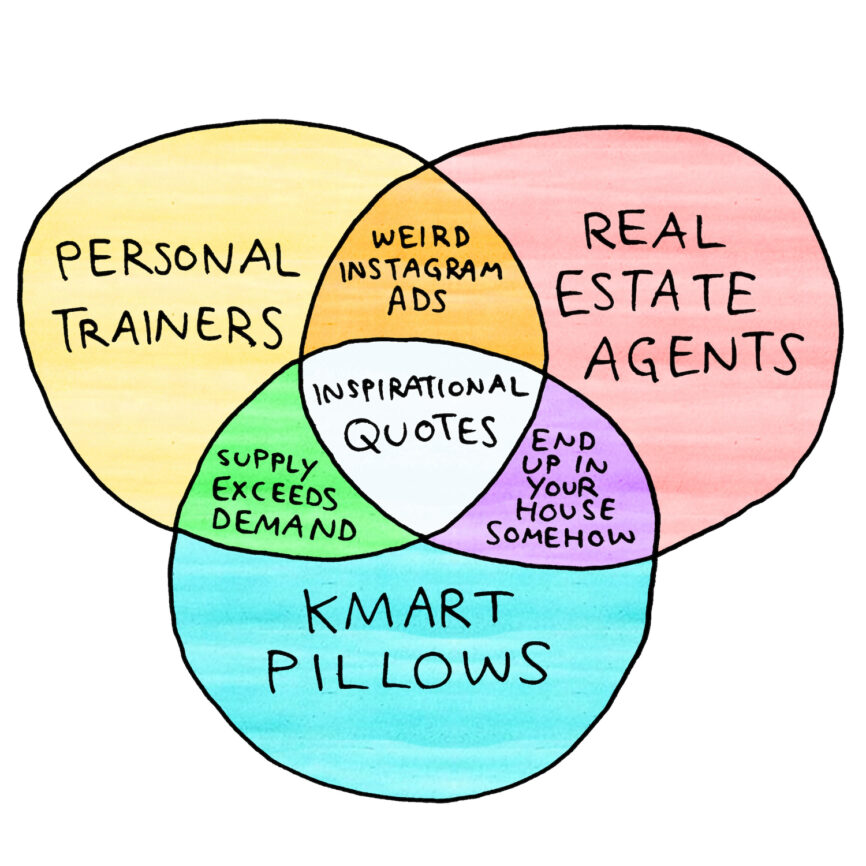
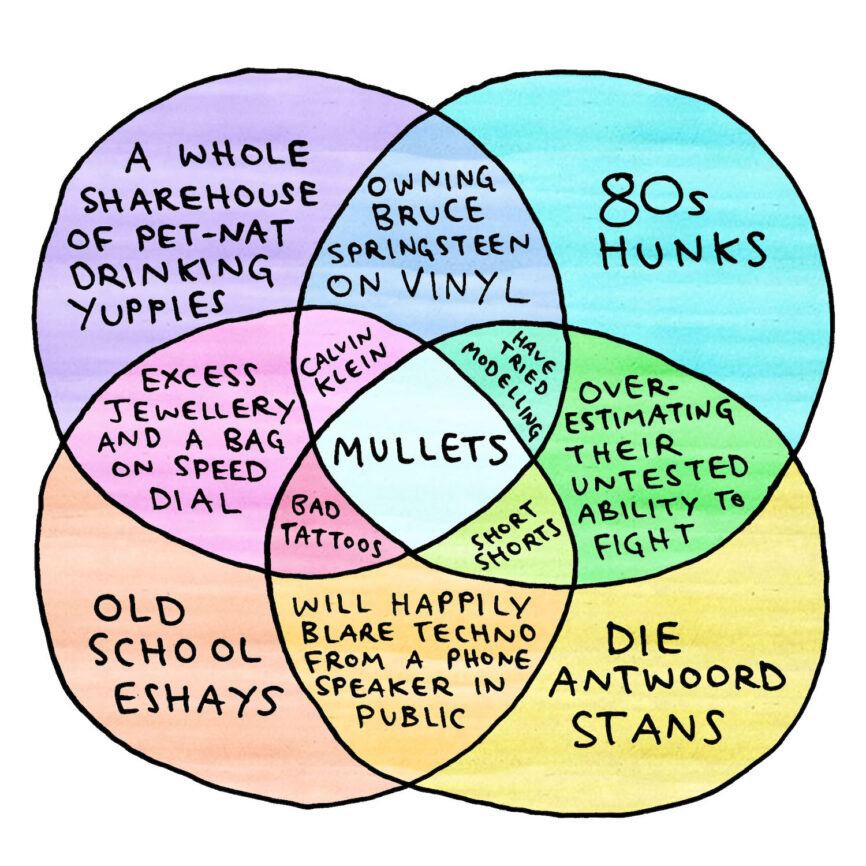
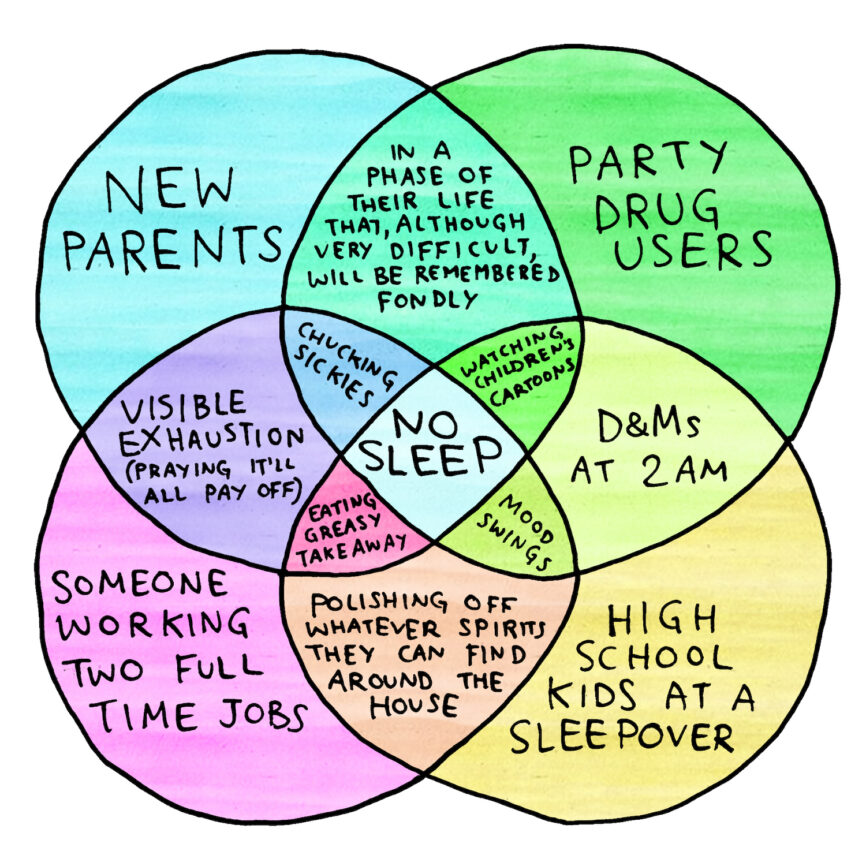
This approach becomes especially handy when the subject matter is quite dark. For example, I’ve made work about PTSD, depression, abuse, trauma, and suicide, and when people see themselves in those pieces, I hope that the resonance comes with relief: it’s not just me. Even if it’s just for a split second while someone is scrolling on their phone… I like at least thinking that I might be able to give someone a nicer feeling of connection
Don’t get me wrong, I don’t think I’m out here changing the world – but for a small group of people, maybe I can make the world not feel as cooked.
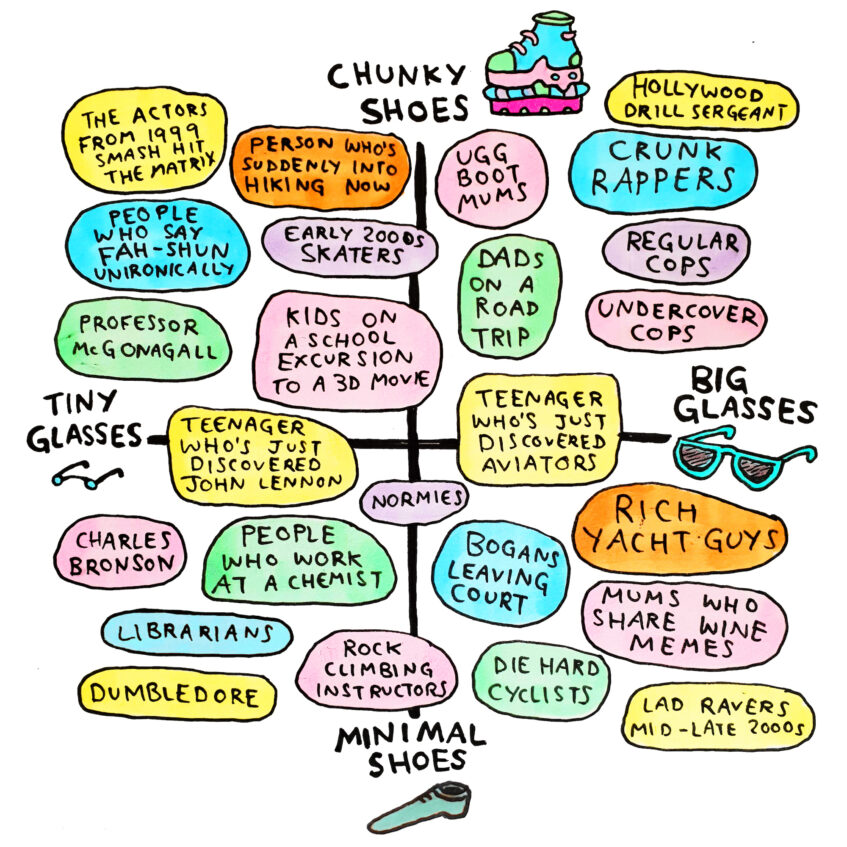
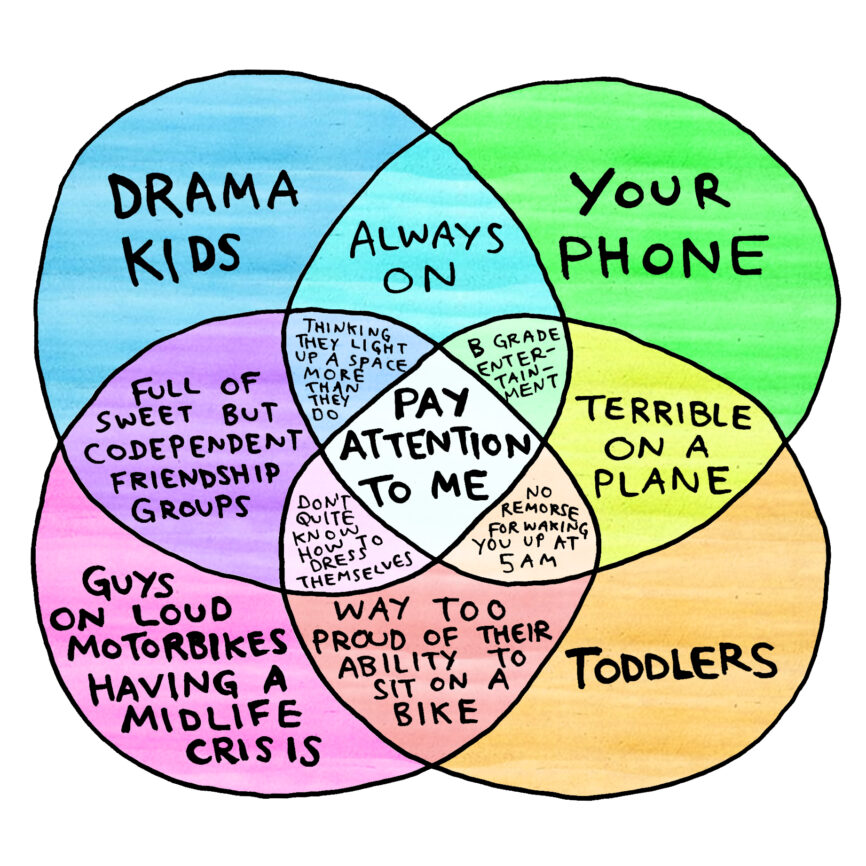
A lot of the comics chosen here are about community. A lot of the Venn diagrams are about cross-sections of our world coming together, with the bizarre overlaps they share. I like the idea that motorbike midlife crisis guys, toddlers, and drama kids would all be related because they’re all so different. And I like that they might have the same flaw (which is my biggest flaw): they really want attention.
Subjects I like are families, trends, and the internet. Specifically, I love that with social media, we’ve all become our own brand managers.
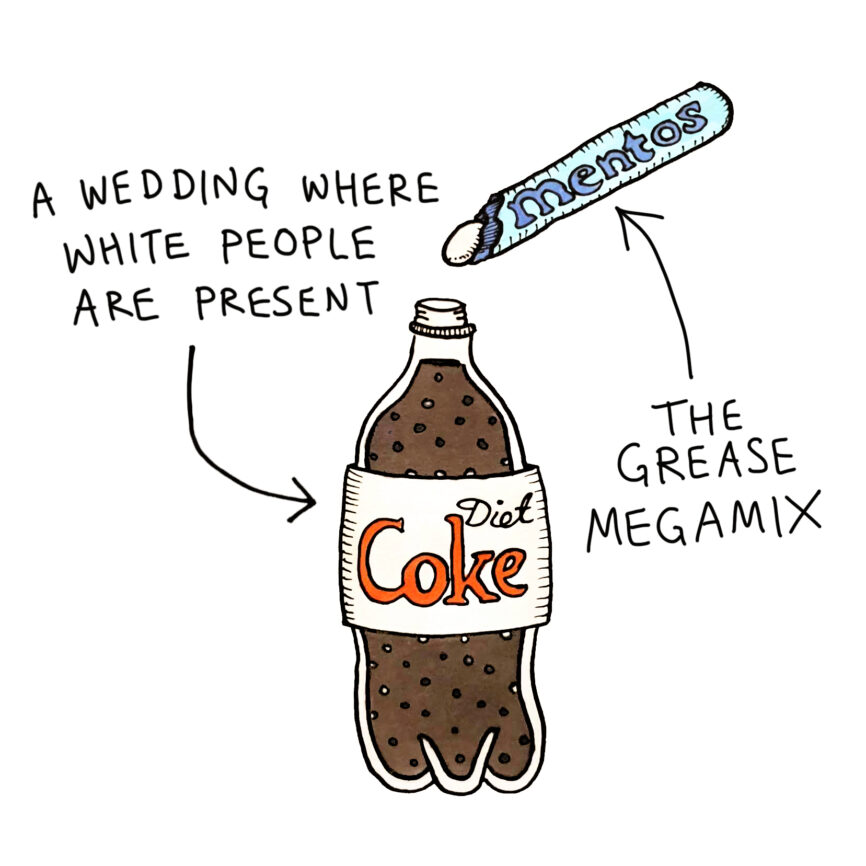
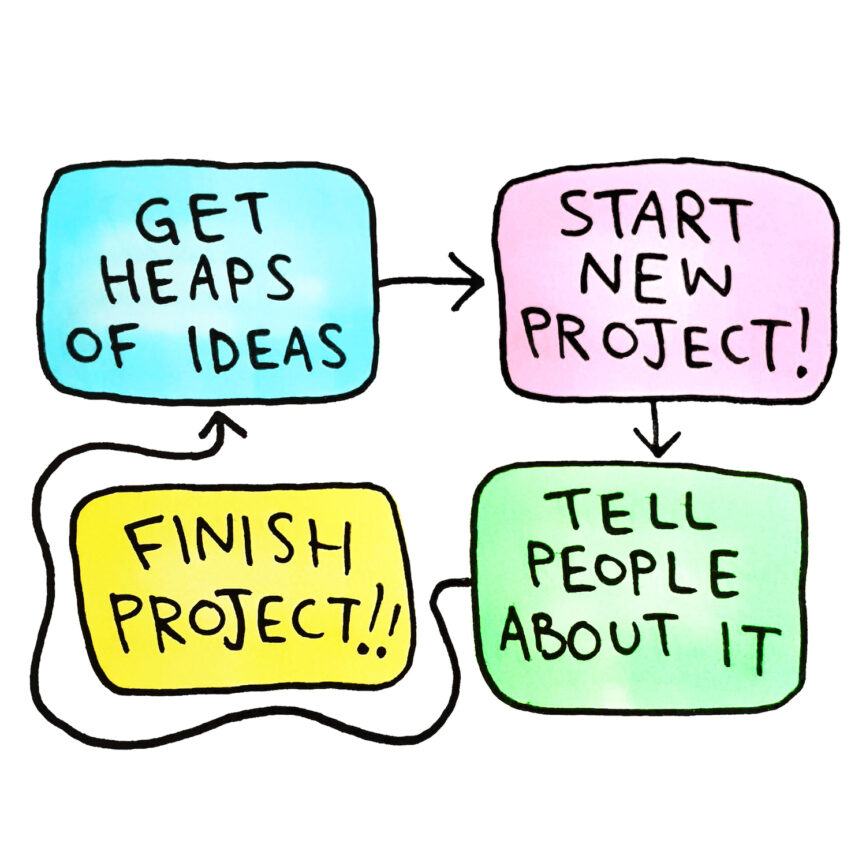
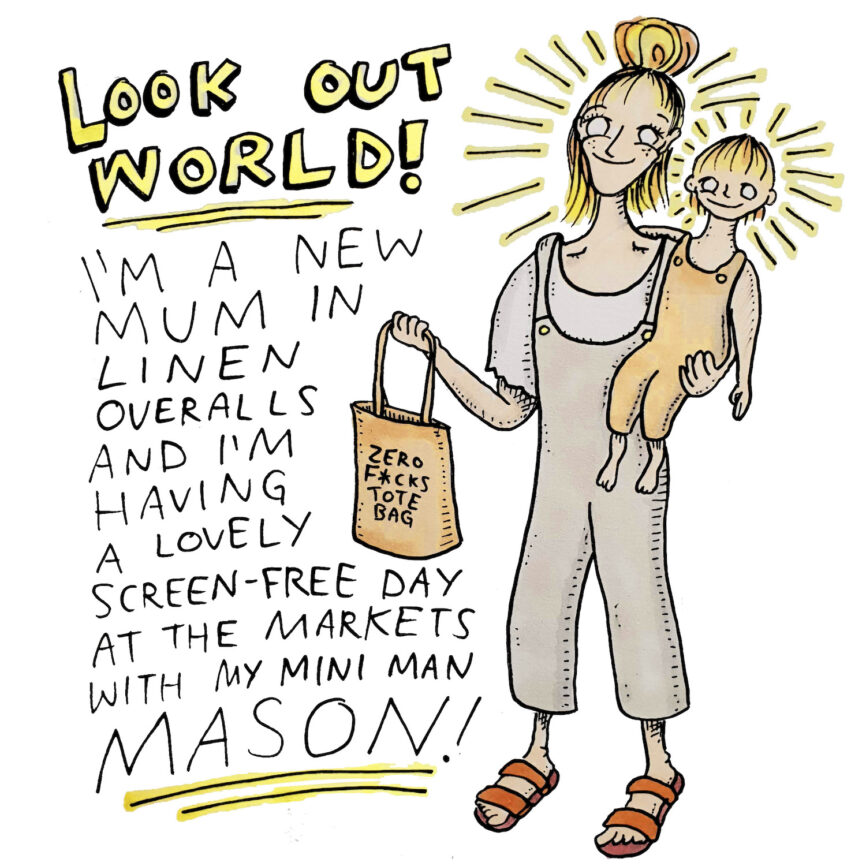
We were to an extent before (through fashion, vocabulary, where we lived, what we did, and who we hung out with), but this has been turbo-charged through social media. Now we can tell the world exactly who we want to be, which makes for a tangible representation of the age-old gap: who you are vs. how you’d like to be perceived. I like drawing this gap.
I’d like to be perceived as good, clever, and funny – but I know that I’m only scratching the surface of these attributes on a good day. Mostly I’m lazy, moody, and avoidant. If I have this gap, I assume a lot of other people do too, and I hope that this shines through in my work.
Ultimately, I love the people around me. I love my community and I also love the communities that I’m not a part of. I try to reflect on the things I see and make people feel good. Hopefully, I do it in a way that pokes harmless fun and not in a way that causes insecurities (but I know I miss this mark regularly). My aim is that people have a laugh, see themselves, and appreciate the absurd context that is our culture.
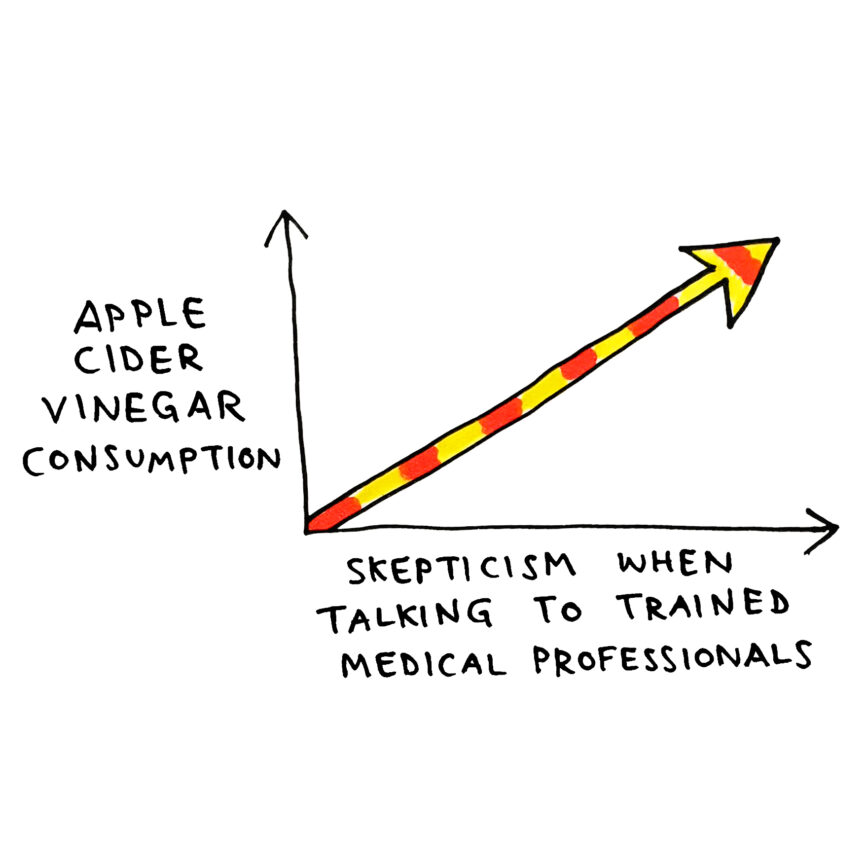
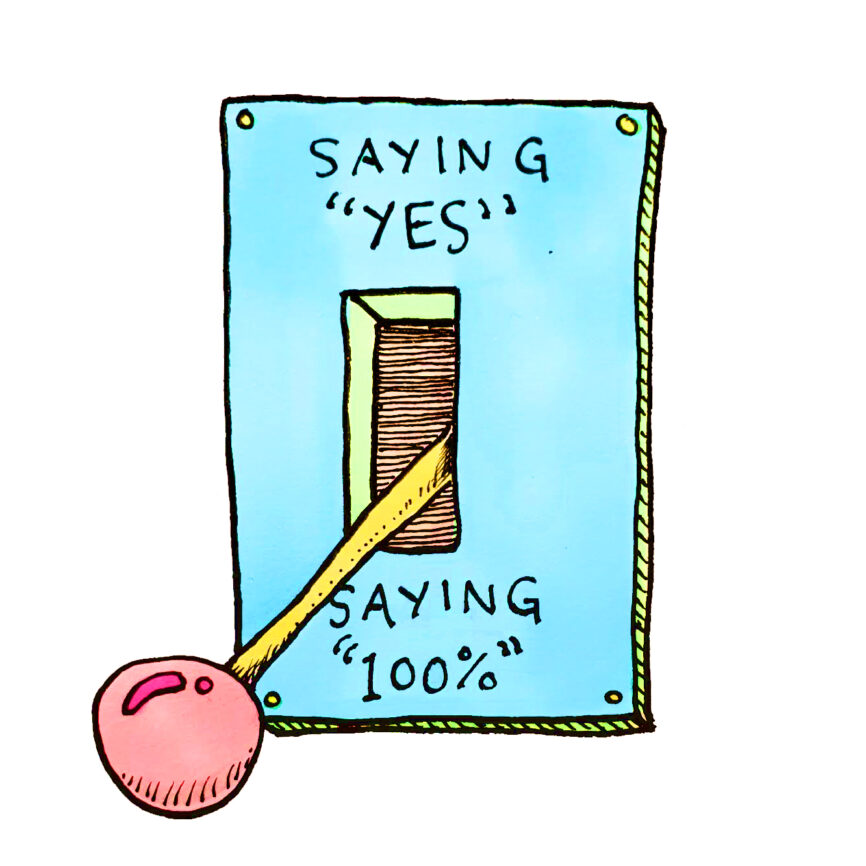
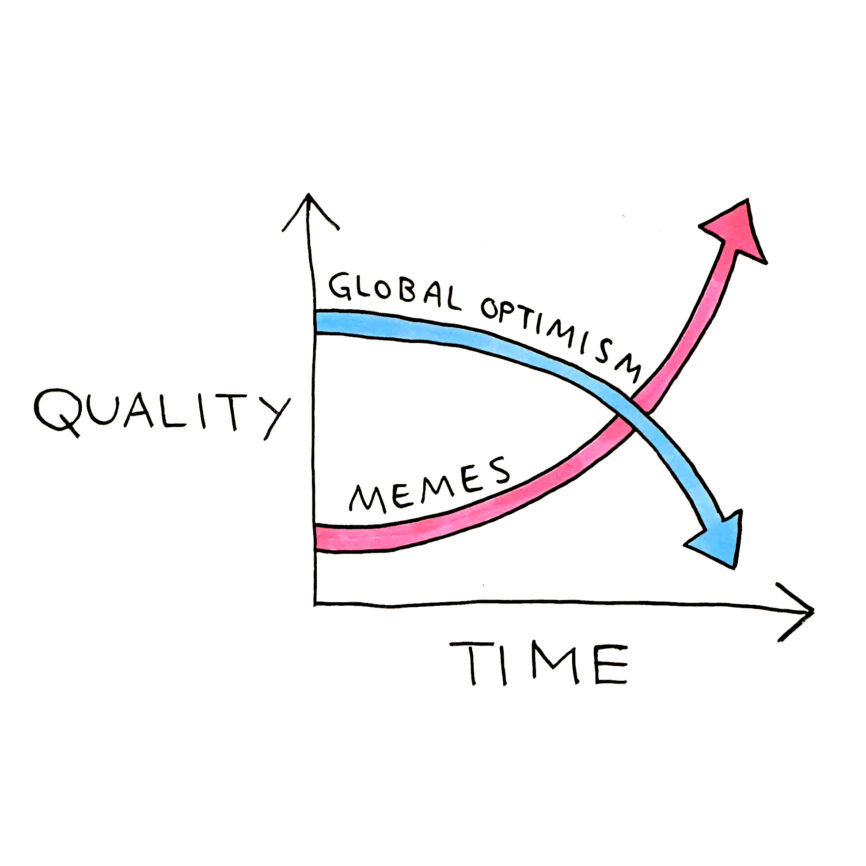
I’ve since added a new focus to my work: trying to articulate what’s going on in our heads. Obviously, this goal is pretty audacious, but my theory is that our heads and thought processes can’t be that different. If something passes my focus group of one, it’ll translate to a wider audience. From this lens, I’ve recently written and illustrated my first book ‘Your Head is a Houseboat’. The book is a journey into your brain, told through the metaphor of a ridiculously jam-packed houseboat, with a nice forward by psychologist Cass Dunn. The book is a guide to mental clarity, with illustrated explanations of brain functions, and journaling exercises. It comes out this October and has been called “the most important and accessible mental health book in a generation” by Osher Gunsberg… no pressure!
*Many a True Word was first published in Commune, issue o3 of our journal. Copies can be purchased through TheFulcrum.Press and all proceeds are directed to The Fulcrum Fund , a charitable fund that we established to support projects in First Nations communities.
Next Article
Michelle Blakeley on Commune
(View Article)